Dwenjang Guk (Spicy, Hearty Korean Style Miso Soup). Great recipe for Dwenjang Guk (Spicy, Hearty Korean Style Miso Soup). There are some elaborate Korean soups and stews that take quite a bit more work to make, but Dwenjang Guk (DWENjahng GOOHK) - dwenjang meaning Korean style miso and guk meaning soup - is a super simple and basic recipe to which. Adding miso is really not traditional but I really like the touch of sweetness and smoothness it adds to the soup.
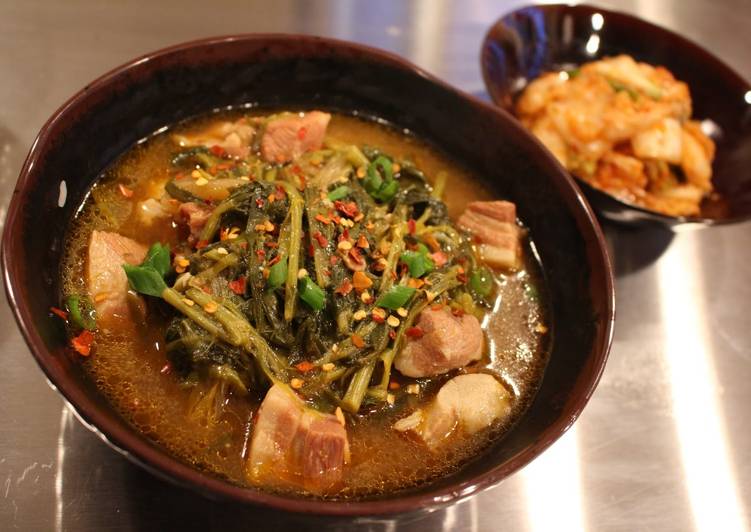 Doenjang, fermented soybean paste, is a staple Korean condiment and used as a base for stew or soup.
As with doenjang jjigae (stew version), doenjang guk (soup) is also one of the most representative Korean home cooked dishes.
While the stew version is typically hearty, thick and pungent, the soup is light and mild and has more broth.
You can have Dwenjang Guk (Spicy, Hearty Korean Style Miso Soup) using 14 ingredients and 7 steps. Here is how you achieve that.
Doenjang, fermented soybean paste, is a staple Korean condiment and used as a base for stew or soup.
As with doenjang jjigae (stew version), doenjang guk (soup) is also one of the most representative Korean home cooked dishes.
While the stew version is typically hearty, thick and pungent, the soup is light and mild and has more broth.
You can have Dwenjang Guk (Spicy, Hearty Korean Style Miso Soup) using 14 ingredients and 7 steps. Here is how you achieve that.
Ingredients of Dwenjang Guk (Spicy, Hearty Korean Style Miso Soup)
- You need 5 cups of unsalted stock (chicken, pork, beef, turkey and veg all work fine).
- Prepare 5 cups of water.
- Prepare 1/2 of an onion, cut into thirds.
- It's 4 of garlic cloves, peeled and crushed.
- You need 1/4 cup of dwenjang (or miso if you don't have dwenjang, but dwenjang is usually much more pungent).
- You need 2 Tablespoons of to 1/4 cup gochujang (Korean chili paste), depending on how hot you like things.
- You need 2 teaspoons of sugar (to round out the flavors and the salt from the pastes).
- You need of salt and/or fish sauce if needed to adjust the seasoning.
- Prepare 8 cups of leafy green veg, fresh or extruded (it'll look like a lot, but it will reduce quite a bit after cooking).
- It's 1-2 of fresh jalapeños or serranos if you like a little extra heat and chili flavor (optional).
- You need of Optional if you'd like protein (you can do one or the other, or half of each):.
- Prepare 1 pound of pork shoulder or beef stew meat cut into 1-inch cubes (optional, but it helps to have a little protein if you're going to make a meal of it).
- It's of or.
- Prepare 1 package of medium or firm tofu (usually 12 to 14 ounces), drained and cut into 1-inch cubes.
Doenjang is essential in Korean cuisine, and every Korean home has it all year round along with other staple condiments such as gochujang (fermented chili pepper paste). Its deep, rich flavor is created by several months of fermentation and aging. Doenjang is traditionally homemade, but there are many commercial brands available at Korean markets. Last on our list of recipes using Doenjang, Gamjatang is a wonderfully hearty and spicy Korean stew made with pork neck bones (or pork ribs) and potatoes.
Dwenjang Guk (Spicy, Hearty Korean Style Miso Soup) instructions
- Put the stock, water, onion, garlic, dwenjang, gochujang, sugar, meat and any extruded veg into a large pot (fresh veg goes in later). Bring to a boil, covered, over medium high heat (should take 15 minutes or so)..
- Once it's come to a boil, turn the heat down to medium low and simmer, covered, for another 20 minutes before adding any fresh veg and tofu..
- Simmer another 10 minutes or so, then adjust the seasoning for salt. If you've added fresh veg and/or tofu, you will almost certainly need to adjust for the water they will release into the soup..
- Simmer another 15 minutes with the lid askew, adjust seasoning one last time if needed, and that's it!.
- If you want to have it with rice, you'll want to put the rice on to cook when you leave the soup to simmer the first time..
- It's always yummier with kimchi. Here's my kimchi recipe (which of course you would have to have made days to weeks in advance): https://cookpad.com/us/recipes/1567994-kimchi-easier-than-you-think.
- EXTRUDING LIQUID FROM GREENS: Just wash the greens, sprinkle them with salt, and let them sit for a couple of hours, tossing them 2 or 3 times during the process, letting the salt draw the moisture from them. After they've released the excess liquid, just give them a good swish in a big bowl full of clean water, and squeeeeeeeze all that liquid out. You can then freeze the greens for future use, or refrigerate them for 2 to 3 weeks before using..
Doenjang goes into the seasoning sauce along with Korean red chili paste (gochujang), chili flakes (gochukaru), anchovy sauce, and soup soy sauce. Today my doenjang (fermented soybean paste) project is done by releasing this video recipe: How to make one of the most popular and representative doenjang dishes: doenjang-jjigae aka fermented. Spinach soybean paste soup (Si-geum-chi Doenjang-guk) has been a popular dish on the Korean dinner table for many years. It's very simple to make, and it's nutritious. Compared to doenjang jjigae (soybean paste stew) , it's lighter in consistency and taste.